
Fairy Tales

Short Stories
Some Particulars Concerning a Lion
A Good-Humoured Christmas Chapter
What Christmas Is As We Grow Older
The Story of the Goblins Who stole a Sexton
Familiar Epistle from a Parent to a Child Aged Two Years and Two Months
Christmas at Fezziwig's Warehouse
Full Report of the First Meeting of the Mudfog Association
Full Report of the Second Meeting of the Mudfog Association
Mr. Pickwick's Romantic Adventure to Meet with a Middle-aged Lady in Yellow Curl-Papers
Mr. Robert Bolton: The 'Gentleman Connected with the Press'
Public Life of Mr. Tulrumble--Once Mayor of Mudfog

A Slander
SERGE KAPITONICH AHINEEV, the writing master, was marrying his daughter to the teacher of history and geography. The wedding festivities were going off most successfully. In the drawing room there was singing, playing, and dancing. Waiters hired from the club were flitting distractedly about the rooms, dressed in black swallowtails and dirty white ties. There was a continual hubub and din of conversation. Sitting side by side on the sofa, the teacher of mathematics, the French teacher, and the junior assessor of taxes were talking hurriedly and interrupting one another as they described to the guests cases of persons being buried alive, and gave their opinions on spiritualism. None of them believed in spiritualism, but all admitted that there were many things in this world which would always be beyond the mind of man. In the next room the literature master was explaining to the visitors the cases in which a sentry has the right to fire on passers-by. The subjects, as you perceive, were alarming, but very agreeable. Persons whose social position precluded them from entering were looking in at the windows from the yard.
Just at midnight the master of the house went into the kitchen to see whether everything was ready for supper. The kitchen from floor to ceiling was filled with fumes composed of goose, duck, and many other odors. On two tables the accessories, the drinks and light refreshments, were set out in artistic disorder. The cook, Marfa, a red-faced woman whose figure was like a barrel with a belt around it, was bustling about the tables.
"Show me the sturgeon, Marfa," said Ahineev, rubbing his hands and licking his lips. "What a perfume! I could eat up the whole kitchen. Come, show me the sturgeon."
Marfa went up to one of the benches and cautiously lifted a piece of greasy newspaper. Under the paper on an immense dish there reposed a huge sturgeon, masked in jelly and decorated with capers, olives, and carrots. Ahineev gazed at the sturgeon and gasped. His face beamed, he turned his eyes up. He bent down and with his lips emitted the sound of an ungreased wheel. After standing a moment he snapped his fingers with delight and once more smacked his lips.
"Ah-ah! the sound of a passionate kiss. . . . Who is it you're kissing out there, little Marfa?" came a voice from the next room, and in the doorway there appeared the cropped head of the assistant usher, Vankin. "Who is it? A-a-h! . . . Delighted to meet you! Sergei Kapitonich! You're a fine grandfather, I must say!"
"I'm not kissing," said Ahineev in confusion. "Who told you so, you fool? I was only . . . I smacked my lips . . . in reference to . . . as an indication of. . . pleasure . . . at the sight of the fish."
"Tell that to the marines!" The intrusive face vanished, wearing a broad grin.
Ahineev flushed.
"Hang it!" he thought, "the beast will go now and talk scandal. He'll disgrace me to all the town, the brute."
Ahineev went timidly into the drawing room and looked stealthily round for Vankin. Vankin was standing by the piano, and, bending down with a jaunty air, was whispering something to the inspector's sister-in-law, who was laughing.
"Talking about me!" thought Ahineev. "About me, blast him! And she believes it . . . believes it! She laughs! Mercy on us! No, I can't let it pass . . . I can't. I must do something to prevent his being believed. . . . I'll speak to them all, and he'll be shown up for a fool and a gossip."
Ahineev scratched his head, and still overcome with embarrassment, went up to the French teacher.
"I've just been in the kitchen to see after the supper," he said to the Frenchman. "I know you are fond of fish, and I've a sturgeon, my dear fellow, beyond everything! A yard and a half long! Ha, ha, ha! And, by the way . . . I was just forgetting. . . . In the kitchen just now, with that sturgeon . . . quite a little story! I went into the kitchen just now and wanted to look at the supper dishes. I looked at the sturgeon and I smacked my lips with relish . . . at the piquancy of it. And at the very moment that fool Vankin came in and said: . . . 'Ha, ha, ha! . . . So you're kissing here!' Kissing Marfa, the cook! What a thing to imagine, silly fool! The woman is a perfect fright, like all the beasts put together, and he talks about kissing! Queer fish!"
"Who's a queer fish?" asked the mathematics teacher, coming up.
"Why he, over there--Vankin! I went into the kitchen . . ."
And he told the story of Vankin. ". . . He amused me, queer fish! I'd rather kiss a dog than Marfa, if you ask me," added Ahineev. He looked round and saw behind him the junior assessor of taxes.
"We were talking of Vankin," he said. "Queer fish, he is! He went into the kitchen, saw me beside Marfa, and began inventing all sorts of silly stories. 'Why are you kissing?' he says. He must have had a drop too much. 'And I'd rather kiss a turkeycock than Marfa,' I said, 'And I've a wife of my own, you fool,' said I. He did amuse me!"
"Who amused you?" asked the priest who taught Scripture in the school, going up to Ahineev.
"Vankin. I was standing in the kitchen, you know, looking at the sturgeon. . . ."
And so on. Within half an hour or so all the guests knew the incident of the sturgeon and Vankin.
"Let him tell away now!" thought Ahineev, rubbing his hands. "Let him! He'll begin telling his story and they'll say to him at once, 'Enough of your improbable nonsense, you fool, we know all about it!"
And Ahineev was so relieved that in his joy he drank four glasses too many. After escorting the young people to their room, he went to bed and slept like an innocent babe, and next day he thought no more of the incident with the sturgeon. But, alas! man proposes, but God disposes. An evil tongue did its evil work, and Ahineev's strategy was of no avail. Just a week later--to be precise, on Wednesday after the third lesson--when Ahineev was standing in the middle of the teacher's room, holding forth on the vicious propensities of a boy called Visekin, the headmaster went up to him and drew him aside:
"Look here, Sergei Kapitonich," said the headmaster, "you must excuse me. . . . It's not my business; but all the same I must make you realize. . . . It's my duty. You see, there are rumors that you are romancing with that . . . cook. . . . It's nothing to do with me, but . . . flirt with her, kiss her . . . as you please, but don't let it be so public, please. I entreat you! Don't forget that you're a schoolmaster."
Ahineev turned cold and faint. He went home like a man stung by a whole swarm of bees, like a man scalded with boiling water. As he walked home, it seemed to him that the whole town was looking at him as though he were smeared with pitch. At home fresh trouble awaited him.
"Why aren't you gobbling up your food as usual?" his wife asked him at dinner. "What are you so pensive about? Brooding over your amours? Pining for your Marfa? I know all about it, Mohammedan! Kind friends have opened my eyes! O-o-o! . . . you savage !"
And she slapped him in the face. He got up from the table, not feeling the earth under his feet, and without his hat or coat, made his way to Vankin. He found him at home.
"You scoundrel!" he addressed him. "Why have you covered me with mud before all the town? Why did you set this slander going about me?"
"What slander? What are you talking about?"
"Who was it gossiped of my kissing Marfa? Wasn't it you? Tell me that. Wasn't it you, you brigand?"
Vankin blinked and twitched in every fiber of his battered countenance, raised his eyes to the icon and articulated, "God blast me! Strike me blind and lay me out, if I said a single word about you! May I be left without house and home, may I be stricken with worse than cholera!"
Vankin's sincerity did not admit of doubt. It was evidently not he who was the author of the slander.
"But who, then, who?" Ahineev wondered, going over all his acquaintances in his mind and beating himself on the breast. "Who, then?"
Art
A GLOOMY winter morning.
On the smooth and glittering surface of the river Bystryanka, sprinkled here and there with snow, stand two peasants, scrubby little Seryozhka and the church beadle, Matvey. Seryozhka, a short-legged, ragged, mangy-looking fellow of thirty, stares angrily at the ice. Tufts of wool hang from his shaggy sheepskin like a mangy dog. In his hands he holds a compass made of two pointed sticks. Matvey, a fine-looking old man in a new sheepskin and high felt boots, looks with mild blue eyes upwards where on the high sloping bank a village nestles picturesquely. In his hands there is a heavy crowbar.
"Well, are we going to stand like this till evening with our arms folded?" says Seryozhka, breaking the silence and turning his angry eyes on Matvey. "Have you come here to stand about, old fool, or to work?"
"Well, you . . . er . . . show me . . ." Matvey mutters, blinking mildly.
"Show you. . . . It's always me: me to show you, and me to do it. They have no sense of their own! Mark it out with the compasses, that's what's wanted! You can't break the ice without marking it out. Mark it! Take the compass."
Matvey takes the compasses from Seryozhka's hands, and, shuffling heavily on the same spot and jerking with his elbows in all directions, he begins awkwardly trying to describe a circle on the ice. Seryozhka screws up his eyes contemptuously and obviously enjoys his awkwardness and incompetence.
"Eh-eh-eh!" he mutters angrily. "Even that you can't do! The fact is you are a stupid peasant, a wooden-head! You ought to be grazing geese and not making a Jordan! Give the compasses here! Give them here, I say!"
Seryozhka snatches the compasses out of the hands of the perspiring Matvey, and in an instant, jauntily twirling round on one heel, he describes a circle on the ice. The outline of the new Jordan is ready now, all that is left to do is to break the ice. . .
But before proceeding to the work Seryozhka spends a long time in airs and graces, whims and reproaches. . .
"I am not obliged to work for you! You are employed in the church, you do it!
He obviously enjoys the peculiar position in which he has been placed by the fate that has bestowed on him the rare talent of surprising the whole parish once a year by his art. Poor mild Matvey has to listen to many venomous and contemptuous words from him. Seryozhka sets to work with vexation, with anger. He is lazy. He has hardly described the circle when he is already itching to go up to the village to drink tea, lounge about, and babble. . .
"I'll be back directly," he says, lighting his cigarette, "and meanwhile you had better bring something to sit on and sweep up, instead of standing there counting the crows."
Matvey is left alone. The air is grey and harsh but still. The white church peeps out genially from behind the huts scattered on the river bank. Jackdaws are incessantly circling round its golden crosses. On one side of the village where the river bank breaks off and is steep a hobbled horse is standing at the very edge, motionless as a stone, probably asleep or deep in thought.
Matvey, too, stands motionless as a statue, waiting patiently. The dreamily brooding look of the river, the circling of the jackdaws, and the sight of the horse make him drowsy. One hour passes, a second, and still Seryozhka does not come. The river has long been swept and a box brought to sit on, but the drunken fellow does not appear. Matvey waits and merely yawns. The feeling of boredom is one of which he knows nothing. If he were told to stand on the river for a day, a month, or a year he would stand there.
At last Seryozhka comes into sight from behind the huts. He walks with a lurching gait, scarcely moving. He is too lazy to go the long way round, and he comes not by the road, but prefers a short cut in a straight line down the bank, and sticks in the snow, hangs on to the bushes, slides on his back as he comes -- and all this slowly, with pauses.
"What are you about?" he cries, falling on Matvey at once. "Why are you standing there doing nothing! When are you going to break the ice?"
Matvey crosses himself, takes the crowbar in both hands, and begins breaking the ice, carefully keeping to the circle that has been drawn. Seryozhka sits down on the box and watches the heavy clumsy movements of his assistant.
"Easy at the edges! Easy there!" he commands. "If you can't do it properly, you shouldn't undertake it, once you have undertaken it you should do it. You!"
A crowd collects on the top of the bank. At the sight of the spectators Seryozhka becomes even more excited.
"I declare I am not going to do it . . ." he says, lighting a stinking cigarette and spitting on the ground. "I should like to see how you get on without me. Last year at Kostyukovo, Styopka Gulkov undertook to make a Jordan as I do. And what did it amount to -- it was a laughing-stock. The Kostyukovo folks came to ours -- crowds and crowds of them! The people flocked from all the villages."
"Because except for ours there is nowhere a proper Jordan . . ."
"Work, there is no time for talking. . . . Yes, old man . . . you won't find another Jordan like it in the whole province. The soldiers say you would look in vain, they are not so good even in the towns. Easy, easy!"
Matvey puffs and groans. The work is not easy. The ice is firm and thick; and he has to break it and at once take the pieces away that the open space may not be blocked up.
But, hard as the work is and senseless as Seryozhka's commands are, by three o'clock there is a large circle of dark water in the Bystryanka.
"It was better last year," says Seryozhka angrily. "You can't do even that! Ah, dummy! To keep such fools in the temple of God! Go and bring a board to make the pegs! Bring the ring, you crow! And er . . . get some bread somewhere. . . and some cucumbers, or something."
Matvey goes off and soon afterwards comes back, carrying on his shoulders an immense wooden ring which had been painted in previous years in patterns of various colours. In the centre of the ring is a red cross, at the circumference holes for the pegs. Seryozhka takes the ring and covers the hole in the ice with it.
"Just right . . . it fits. . . . We have only to renew the paint and it will be first-rate. . . . Come, why are you standing still? Make the lectern. Or--er--go and get logs to make the cross . . ."
Matvey, who has not tasted food or drink all day, trudges up the hill again. Lazy as Seryozhka is, he makes the pegs with his own hands. He knows that those pegs have a miraculous power: whoever gets hold of a peg after the blessing of the water will be lucky for the whole year. Such work is really worth doing.
But the real work begins the following day. Then Seryozhka displays himself before the ignorant Matvey in all the greatness of his talent. There is no end to his babble, his fault-finding, his whims and fancies. If Matvey nails two big pieces of wood to make a cross, he is dissatisfied and tells him to do it again. If Matvey stands still, Seryozhka asks him angrily why he does not go; if he moves, Seryozhka shouts to him not to go away but to do his work. He is not satisfied with his tools, with the weather, or with his own talent; nothing pleases him.
Matvey saws out a great piece of ice for a lectern.
"Why have you broken off the corner?" cries Seryozhka, and glares at him furiously. "Why have you broken off the corner? I ask you."
"Forgive me, for Christ's sake."
"Do it over again!"
Matvey saws again . . . and there is no end to his sufferings. A lectern is to stand by the hole in the ice that is covered by the painted ring; on the lectern is to be carved the cross and the open gospel. But that is not all. Behind the lectern there is to be a high cross to be seen by all the crowd and to glitter in the sun as though sprinkled with diamonds and rubies. On the cross is to be a dove carved out of ice. The path from the church to the Jordan is to be strewn with branches of fir and juniper. All this is their task.
First of all Seryozhka sets to work on the lectern. He works with a file, a chisel, and an awl. He is perfectly successful in the cross on the lectern, the gospel, and the drapery that hangs down from the lectern. Then he begins on the dove. While he is trying to carve an expression of meekness and humility on the face of the dove, Matvey, lumbering about like a bear, is coating with ice the cross he has made of wood. He takes the cross and dips it in the hole. Waiting till the water has frozen on the cross he dips it in a second time, and so on till the cross is covered with a thick layer of ice. It is a difficult job, calling for a great deal of strength and patience.
But now the delicate work is finished. Seryozhka races about the village like one possessed. He swears and vows he will go at once to the river and smash all his work. He is looking for suitable paints.
His pockets are full of ochre, dark blue, red lead, and verdigris; without paying a farthing he rushes headlong from one shop to another. The shop is next door to the tavern. Here he has a drink; with a wave of his hand he darts off without paying. At one hut he gets beetroot leaves, at another an onion skin, out of which he makes a yellow colour. He swears, shoves, threatens, and not a soul murmurs! They all smile at him, they sympathise with him, call him Sergey Nikititch; they all feel that his art is not his personal affair but something that concerns them all, the whole people. One creates, the others help him. Seryozhka in himself is a nonentity, a sluggard, a drunkard, and a wastrel, but when he has his red lead or compasses in his hand he is at once something higher, a servant of God.
Epiphany morning comes. The precincts of the church and both banks of the river for a long distance are swarming with people. Everything that makes up the Jordan is scrupulously concealed under new mats. Seryozhka is meekly moving about near the mats, trying to control his emotion. He sees thousands of people. There are many here from other parishes; these people have come many a mile on foot through the frost and the snow merely to see his celebrated Jordan. Matvey, who had finished his coarse, rough work, is by now back in the church, there is no sight, no sound of him; he is already forgotten. . . . The weather is lovely. . . . There is not a cloud in the sky. The sunshine is dazzling.
The church bells ring out on the hill . . . Thousands of heads are bared, thousands of hands are moving, there are thousands of signs of the cross!
And Seryozhka does not know what to do with himself for impatience. But now they are ringing the bells for the Sacrament; then half an hour later a certain agitation is perceptible in the belfry and among the people. Banners are borne out of the church one after the other, while the bells peal in joyous haste. Seryozhka, trembling, pulls away the mat . . . and the people behold something extraordinary. The lectern, the wooden ring, the pegs, and the cross in the ice are iridescent with thousands of colors. The cross and the dove glitter so dazzlingly that it hurts the eyes to look at them. Merciful God, how fine it is! A murmur of wonder and delight runs through the crowd; the bells peal more loudly still, the day grows brighter; the banners oscillate and move over the crowd as over the waves. The procession, glittering with the settings of the ikons and the vestments of the clergy, comes slowly down the road and turns towards the Jordan. Hands are waved to the belfry for the ringing to cease, and the blessing of the water begins. The priests conduct the service slowly, deliberately, evidently trying to prolong the ceremony and the joy of praying all gathered together. There is perfect stillness.
But now they plunge the cross in, and the air echoes with an extraordinary din. Guns are fired, the bells peal furiously, loud exclamations of delight, shouts, and a rush to get the pegs. Seryozhka listens to this uproar, sees thousands of eyes fixed upon him, and the lazy fellow's soul is filled with a sense of glory and triumph.
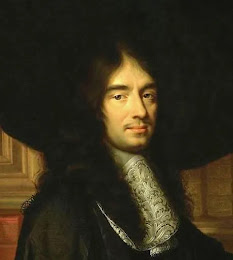
Charles Perrault Fairy Tales The Blue Beard Little Thumb Puss in Boots The fairy The Ridiculous Wishes

.jpeg)
